
Finding the right nanny is one of the most important decisions a parent can make. You’re not just hiring an employee – you’re welcoming someone into your home and trusting them with the people you love most. If you’re searching for how to find a nanny, you’ve come to the right place.
This comprehensive guide walks you through every step of the process – from deciding what type of childcare you need, to where to search, how to screen candidates, what to ask in interviews, how to run background checks, and what to pay. By the end, you’ll have everything you need to find a nanny who’s a perfect fit for your family.
Table of Contents
- Do You Actually Need a Nanny?
- Types of Nannies and Arrangements
- Where to Find a Nanny
- What to Look for in a Nanny
- How to Screen Nanny Candidates
- Interview Questions to Ask
- How to Run a Background Check
- Setting Up a Nanny Contract
- How Much Does a Nanny Cost?
- Red Flags to Watch Out For
- Running a Trial Period
- Frequently Asked Questions
Do You Actually Need a Nanny?
Before diving into the search, it’s worth making sure a nanny is the right childcare solution for your family. Nannies provide one-on-one, in-home care – which is very different from daycare centers or family childcare homes.
A nanny is likely the right choice if you need flexible scheduling, have multiple children, work irregular hours, want your child to stay in the comfort of their own home, or prefer a consistent caregiver who will become a trusted part of your household.
Daycare might make more sense if budget is a primary concern, your child benefits from social interaction with peers, or you prefer a structured institutional environment with licensing oversight.
If you’re on the fence, consider your daily schedule, budget, and your child’s age and temperament. Infants and toddlers often thrive with the personalized attention a nanny provides, while preschool-age children may also benefit from the socialization at daycare.
Types of Nannies and Arrangements
Not all nannies are the same. Understanding the different types will help you narrow your search considerably.
Full-Time Nanny
A full-time nanny typically works 40–50 hours per week and is usually dedicated exclusively to your family. This is the most common arrangement for working parents who need consistent daily coverage. Full-time nannies are classified as household employees, meaning you’ll need to handle payroll taxes.
Part-Time Nanny
Part-time nannies work fewer than 30 hours per week. This works well for parents who work part-time, need coverage a few days a week, or supplement other childcare arrangements. Part-time nannies may work for multiple families simultaneously.
Live-In Nanny
A live-in nanny resides in your home in exchange for a reduced hourly rate (since room and board are provided). This arrangement offers maximum flexibility – especially for families with unpredictable schedules or who need early-morning and late-night coverage. Be sure you have adequate living space and clear boundaries established upfront.
Nanny Share
In a nanny share, two or three families share one nanny, with each family paying a portion of the cost. This can reduce childcare expenses by 30–40% while still providing in-home care. The nanny is typically paid more than if working for one family, but each family pays less individually.
Au Pair
An au pair is a young person (usually from another country) who lives with your family, provides childcare, and participates in a cultural exchange program. Au pairs typically work up to 45 hours per week in exchange for room, board, and a weekly stipend. They must go through a sponsoring agency and have specific visa requirements.
Temporary / Emergency Nanny
For short-term coverage during travel, illness, or transitions, a temporary nanny agency can quickly place a screened caregiver in your home for days or weeks at a time.
Where to Find a Nanny
Once you know what type of childcare you need, it’s time to start your search. You have several strong options.
Online Nanny Platforms
Online platforms are the most popular way to find nannies today. Here are the top options:
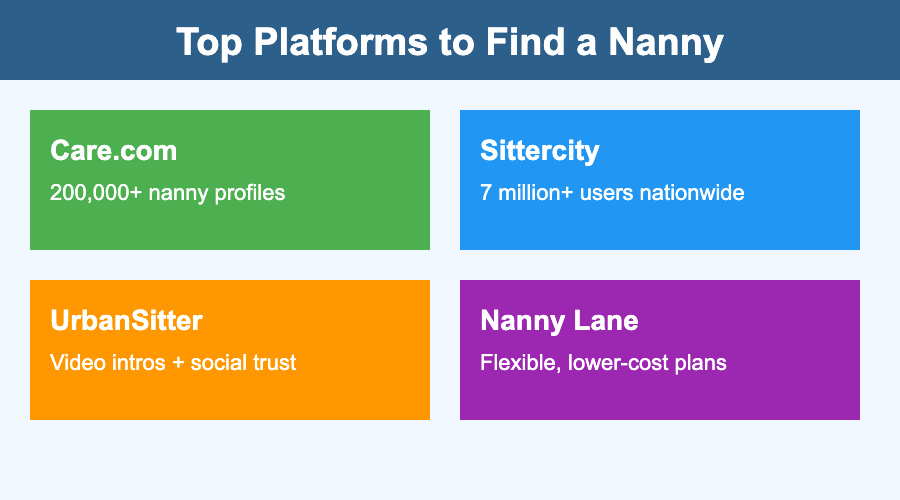
- Care.com – The largest childcare marketplace in the US, with over 200,000 nanny profiles. You can post a free listing or browse profiles with a premium membership (around $39/month). Background checks are available for an additional fee.
- Sittercity – Serving over 7 million users, Sittercity lets you post a job listing and filter candidates by experience, reviews, and availability. Background checks are included with paid plans.
- UrbanSitter – Popular in urban areas, UrbanSitter features video introductions from caregivers and lets you see how others in your network rate a particular nanny – a powerful trust signal.
- Nanny Lane – A newer platform that allows nannies to reach out to families at no cost, keeping the pricing flexible and often lower than competitors.
- Hello Nanny – Focuses on quality over quantity, with pre-screened candidates and more curated matching than broad platforms.
- Bambino – A community-based app that helps you find sitters that friends and neighbors have already used and trusted.
Nanny Agencies
A traditional nanny agency does the heavy lifting for you – they vet candidates, check references, conduct background checks, and match you with suitable applicants. This is more expensive (agency fees can range from $1,000 to $3,000+), but it saves significant time and provides a professional layer of screening that platforms alone may not offer.
Look for agencies that are members of the International Nanny Association (INA) for added credibility.
Word of Mouth and Local Networks
Never underestimate the power of personal recommendations. Ask friends, family, neighbors, and colleagues if they know a trustworthy nanny who may be available. Parents’ groups, school networks, and community Facebook groups are also excellent sources.
Post in local neighborhood groups (Nextdoor, Facebook groups for parents in your city) describing what you’re looking for. You’ll often get referrals from parents who already know and trust the caregiver.
College and University Boards
Early childhood education programs at local colleges are a great source of candidates who are trained in child development and eager to gain experience. Post on campus job boards or contact the education department directly.
Church and Community Bulletin Boards
Local community centers, religious organizations, and YMCAs often have bulletin boards where families and caregivers connect. These can yield great results in close-knit communities where personal reputation matters.
What to Look for in a Nanny
Before you start screening candidates, get clear on your must-haves and nice-to-haves. Every family is different, but here are the key qualities to consider.
Experience and Qualifications
Look for candidates with at least 1–2 years of hands-on experience with children in the age range of your kids. Formal qualifications in early childhood education (ECE), child development, or nursing are a bonus but not always necessary. Most important is practical, verifiable experience with positive references.
CPR and First Aid Certification
This is non-negotiable for most families. Any nanny you hire should be certified in infant and child CPR and basic first aid. Many nannies already have this certification; if not, ask if they’d be willing to get certified before starting.
Warmth and Energy
The best nannies genuinely love being with children. Look for someone who lights up when talking about kids – someone curious, patient, playful, and engaged. You can often sense this in a first meeting.
Reliability and Professionalism
A nanny who shows up late, cancels frequently, or is difficult to communicate with will create major stress in your household. During interviews, ask about their track record with prior families and listen for concrete examples of reliability.
Alignment with Your Parenting Philosophy
Whether you’re attachment-based, screen-free, structured, or laid-back – your nanny should broadly share or at least respect your parenting approach. Misalignment here creates friction and inconsistency for your children.
Driving Ability and Vehicle (if needed)
If you need your nanny to drive your children to school, activities, or appointments, make sure they have a valid driver’s license, a clean driving record, and ideally their own reliable vehicle (or you’ll need to provide one).
How to Screen Nanny Candidates
Once applications start coming in, use a structured screening process to efficiently narrow down to your top candidates.
Step 1: Review Applications and Profiles Carefully
Look for detailed profiles with specific experience, positive reviews or references, and profile photos. Watch for vague descriptions, unexplained employment gaps, or profiles that seem copy-pasted.
Step 2: Phone or Video Pre-Screen
Before inviting anyone into your home, do a 15–20 minute phone or video call. Ask a few basic questions about their experience, availability, and rate expectations. This helps you quickly filter out poor fits before investing in a full interview.
Step 3: In-Person Interview
Invite your top 3–5 candidates for a full in-person interview in your home. Have your children present if possible – watching how a candidate interacts naturally with your kids tells you more than any answer to an interview question.
Step 4: Check References
Always call references – at least two from recent childcare positions. Don’t just confirm dates of employment; ask open-ended questions about the nanny’s strengths, weaknesses, reliability, and how they handled difficult situations. A hesitant or vague reference is a red flag.
Step 5: Run a Background Check
See the dedicated section below for details on how to conduct a thorough background check.
Interview Questions to Ask a Nanny
Use these questions to dig beneath the surface and understand who you’re really hiring.
Experience and Background
- How many years have you been working as a nanny or in childcare?
- What age groups have you worked with? Which is your favorite, and why?
- Tell me about your most recent nanny position. Why did you leave?
- What does a typical day look like with a child who is [your child’s age]?
Childcare Philosophy
- How do you handle discipline or setting limits with young children?
- What’s your approach to screen time?
- How do you encourage language and cognitive development through daily activities?
- How do you handle a child who’s having a tantrum or emotional meltdown?
Safety and Emergencies
- Are you certified in CPR and first aid? When were you last certified?
- What would you do if my child had a serious fall or injury?
- Have you ever handled a medical emergency? What happened?
- How do you childproof and maintain a safe environment?
Logistics and Expectations
- Are you comfortable driving the children? Do you have a valid license and clean record?
- Are you comfortable with pets?
- Are you willing to do light household duties related to the children (laundry, meal prep)?
- What are your expectations around vacation time, sick days, and holidays?
Behavioral Questions (Most Revealing)
- Tell me about a time a child was inconsolable. How did you handle it?
- Describe a conflict you had with a parent about childcare. How was it resolved?
- What’s the most challenging childcare situation you’ve faced, and what did you learn from it?
How to Run a Background Check on a Nanny
A background check is an essential part of the hiring process. Never skip this step, regardless of how trustworthy a candidate seems in person.
What a Nanny Background Check Should Include
- Social Security Number (SSN) verification – Confirms the person is who they claim to be
- Criminal history search – Checks for felony and misdemeanor convictions at national and county levels
- Sex offender registry check – Searches federal and state sex offender databases
- Motor vehicle record (MVR) check – Essential if your nanny will drive your children
- Employment history verification – Confirms they worked where they say they did
- Reference checks – Call previous employers directly; don’t rely solely on written references
Background Check Services to Use
- Care.com Background Check – Basic check costs around $59; convenient if you found your nanny on the platform
- Checkr – Professional-grade background checks used by many businesses, starting at $35–$80
- GoodHire – Offers comprehensive packages from $30–$100+
- BeenVerified – More affordable option starting around $20–$50; good for basic screening
- Sterling – Enterprise-grade screening used by many nanny agencies, $50–$150+
Important: You must obtain written consent from the candidate before running a background check. If a candidate refuses, that’s a serious red flag. Also note that background check laws vary by state – make sure you’re compliant with your local regulations.
Don’t Forget the Social Media Check
While not a formal background check, reviewing a candidate’s public social media profiles can offer additional insight into their character and judgment. Look for any content that raises concerns about maturity, substance use, or attitude toward children.
Setting Up a Nanny Work Agreement
Once you’ve found the right person, put everything in writing. A nanny work agreement (also called a nanny contract) protects both you and your caregiver and reduces the chance of misunderstandings down the road.
What to Include in a Nanny Contract
- Start date, hours, and schedule
- Hourly rate, overtime policy, and payment schedule
- Paid and unpaid time off, holidays, and sick days
- Job duties and responsibilities (childcare, light housekeeping, driving, etc.)
- House rules and behavior expectations
- Screen time policy for children
- Emergency procedures and contact information
- Confidentiality and social media policy
- Notice period for resignation or termination
- Review and raise schedule
Template contracts are available through organizations like the International Nanny Association (INA) and nanny payroll services like Poppins Payroll or GTM Payroll Services.
How Much Does a Nanny Cost in 2026?
Nanny costs vary significantly by location, experience, and the scope of duties involved.
Average Hourly Rates
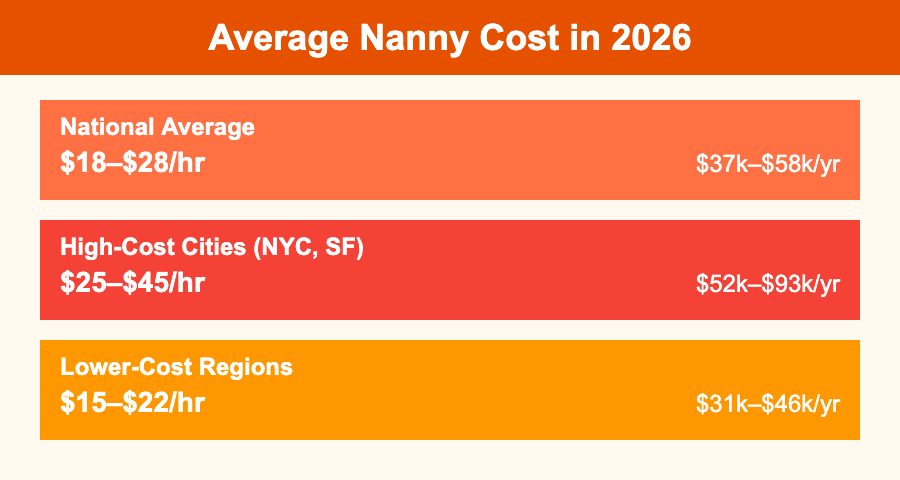
- National average: $18–$28 per hour
- High-cost cities (NYC, San Francisco, Seattle): $25–$45 per hour
- Lower-cost regions (Midwest, rural areas): $15–$22 per hour
- Experienced nannies with special skills (infant care, multilingual, special needs): Can exceed $30–$45/hour in most markets
Full-Time Nanny Annual Cost
For a full-time nanny working 40 hours per week, expect to pay:
- Base salary: $37,000–$58,000 per year nationally
- In high-cost cities: $52,000–$93,000+
Additional Costs to Budget For
- Employer payroll taxes: Approximately 10–15% of gross wages (Social Security, Medicare, unemployment)
- Workers’ compensation insurance: Required in many states, typically $500–$1,500/year
- Paid time off: Factor in 2 weeks vacation, sick days, and holidays
- Year-end bonus: One to two weeks’ pay is customary
- Background check fee: $35–$150 one-time
- Agency fee (if applicable): $1,000–$3,000+ one-time
Services like GTM Payroll Services, Poppins Payroll, and HomePay (from Care.com) can handle nanny taxes, direct deposit, and year-end W-2 forms for around $600–$900 per year. This is well worth it to stay compliant and avoid IRS penalties.
Is a Nanny Tax Deductible?
Yes, in many cases. The Child and Dependent Care Tax Credit allows you to claim up to $3,000 in childcare expenses for one child or $6,000 for two or more children. Dependent Care Flexible Spending Accounts (FSAs) let you set aside up to $5,000 pre-tax. Consult with a tax professional for guidance specific to your situation.
Red Flags to Watch Out For
Even if a candidate seems great on paper, watch for these warning signs during the screening and interview process.
- Vague answers: Struggles to give specific examples from past experience; deflects or gives generic responses
- Gaps in employment: Unexplained gaps between positions that they’re reluctant to discuss
- References who are unavailable or evasive: Can’t provide verifiable references, or references don’t speak enthusiastically
- Disinterest in the children: Doesn’t make eye contact with your kids, doesn’t ask about them during the interview
- Resistance to a background check or trial period: Any hesitation here is a serious concern
- Complaints about previous employers: Speaks negatively and repeatedly about former families
- Inconsistencies in their story: Details about previous jobs, education, or certifications don’t match up
- Excessive phone use during the interview: Suggests they may be distracted while on duty with your children
- No CPR/first aid certification (and unwillingness to get it): Safety certifications are a baseline requirement
Running a Trial Period
Even after a thorough vetting process, it’s wise to start with a paid trial period of 1–2 weeks before committing to a long-term arrangement. During the trial:
- Stay home for the first day or two to observe how the nanny interacts with your children
- Give your kids a chance to warm up – it may take a week or two before children are fully comfortable
- Leave the house gradually, starting with short errands, then longer absences
- Check in with your children about how they feel (adjust for age-appropriateness)
- Set up a communication rhythm – daily check-ins via text or a shared app
Some parents also use nanny cams (with disclosure, where legally required) to gain confidence in the early weeks. Make sure you understand your state’s laws around this before setting up any cameras.
After the trial period, have an honest conversation with the nanny about what’s working and what could be improved. Set up a formal 90-day review from the start date.
Final Checklist: Finding a Nanny
Before you begin your search, use this checklist to stay organized:
- Define your schedule, hours, and nanny type (full-time, part-time, live-in, nanny share)
- Set your budget, including taxes and extras
- Post a detailed job listing on one or more platforms (Care.com, Sittercity, UrbanSitter)
- Screen applications; conduct phone pre-screens
- Invite top 3–5 candidates for in-person interviews
- Check references thoroughly (call, don’t just email)
- Run a full background check on your top candidate
- Negotiate rate and terms; draft a written work agreement
- Start with a paid trial period
- Set up payroll through a nanny payroll service
Ready to Find Your Perfect Nanny?
Finding the right nanny takes time and effort – but it’s worth every minute. The right caregiver doesn’t just watch your children – they become a trusted part of your family, helping your kids grow, learn, and thrive.
Start your search early (ideally 4–8 weeks before you need someone to start), cast a wide net, and don’t rush the process. Use multiple sources, screen carefully, and always trust your gut when something feels off. When you find the right match, you’ll know – and so will your kids.
For more guides on finding trusted professionals, check out our articles on how to find a babysitter, how to find a good doctor, and how to find a financial advisor.
Frequently Asked Questions
How do I find a trustworthy nanny?
The best way to find a trustworthy nanny is to use a combination of reputable platforms (Care.com, Sittercity, UrbanSitter), thorough reference checks, and a professional background check. Word-of-mouth referrals from friends and neighbors are also highly reliable. Trust your instincts during the interview, and always conduct a paid trial period before committing.
What is the best website to find a nanny?
Care.com is the largest platform with the most profiles, making it a great starting point. UrbanSitter is popular in urban areas and includes social trust features. Sittercity offers strong vetting tools. For a more curated experience, consider using a local nanny agency that does the initial screening for you.
How much does a full-time nanny cost per month?
A full-time nanny working 40 hours per week at the national average rate of $18–$28/hour costs approximately $2,880–$4,480 per month in base wages, before taxes. In high-cost cities like New York or San Francisco, monthly costs can reach $5,000–$7,500 or more. Factor in an additional 10–15% for employer payroll taxes.
How long does it take to find a nanny?
Most families take 4–8 weeks to go through the full hiring process, from posting a job to a nanny’s first day. If you’re in a rush, a nanny agency can often place a candidate faster (within 1–2 weeks), though at a higher cost. Starting your search early is highly recommended.
Should I use an agency or find a nanny on my own?
Using an agency costs more upfront ($1,000–$3,000+) but provides pre-screened, vetted candidates and saves significant time. Going directly through platforms like Care.com is more affordable but requires more work on your end for screening. Many families use both: searching platforms while also contacting one or two local agencies.
Do I need to pay nanny taxes?
Yes. If you pay a nanny more than $2,700 in 2026 (the IRS household employee threshold), you are legally required to withhold and remit payroll taxes. This includes Social Security, Medicare, and potentially federal and state unemployment taxes. Services like Poppins Payroll, GTM Payroll, or HomePay can handle this for you for around $600–$900/year.
What should I look for in a nanny’s background check?
A thorough background check should include identity verification (SSN trace), criminal history (national and county level), sex offender registry check, and a motor vehicle record check if the nanny will drive. Always get written consent before running a check, and use a reputable screening provider like Checkr or GoodHire.
How do I know if my child likes the nanny?
Young children show their comfort level through behavior and mood. A good sign is when your child is happy and engaged during and after time with the nanny, and doesn’t show signs of anxiety when you leave. Watch for changes in sleep patterns, appetite, or behavior that might signal stress. For older children, simply ask them how they feel.