Figuring out how to find a wedding venue is one of the biggest and earliest decisions you’ll make while planning your big day. The venue sets the tone, shapes the budget, dictates the guest experience, and even influences your vendor list. Nail it, and every other decision becomes easier. Get it wrong, and you’ll feel the ripple effects for the next 12 months of planning.
The tricky part? Great wedding venues get booked 12 to 18 months out (sometimes 2 years for peak Saturdays), prices are climbing faster than inflation, and there are more venue types than ever — barns, breweries, rooftops, museums, estates, beaches, boutique hotels, you name it. It’s easy to feel overwhelmed before you’ve even started.
This guide walks you through exactly how to find the right wedding venue for your style, guest count, and budget — without wasting weekends touring places that were never going to work. Whether you’re engaged and ready to book this month or just daydreaming through Pinterest, you’ll leave with a clear, step-by-step plan.
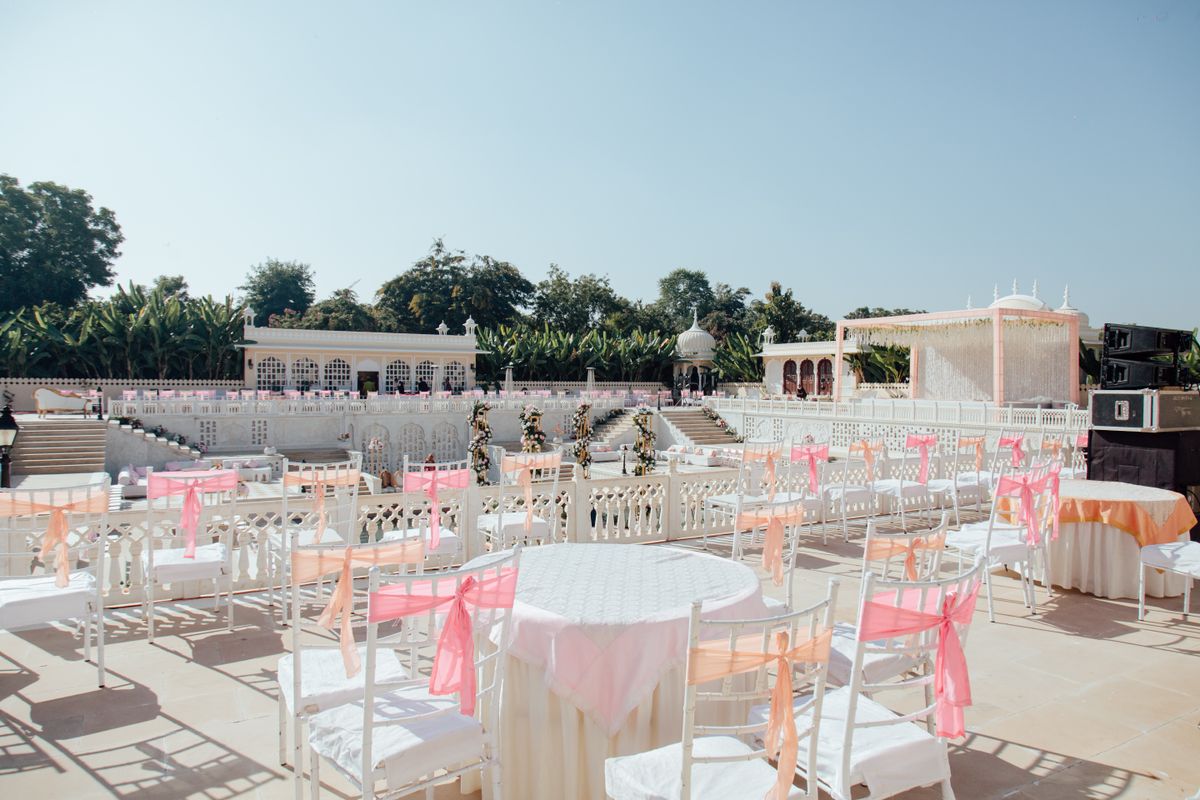
Table of Contents
- Why Finding the Right Wedding Venue Matters
- Do This Before You Start Searching
- Where to Search for Wedding Venues
- Types of Wedding Venues to Consider
- How to Build a Smart Shortlist
- Touring Venues: What to Look For
- Questions to Ask Every Wedding Venue
- How to Compare Venues Fairly
- How to Find an Affordable Wedding Venue
- Reading the Contract Before You Sign
- Common Mistakes to Avoid
- FAQ
Why Finding the Right Wedding Venue Matters
The venue is usually the single largest line item in a wedding budget, typically accounting for 30–50% of total spending once you factor in rentals, catering minimums, and service fees. It also locks in most of the other decisions you haven’t made yet: how many guests you can realistically invite, what your ceremony and reception will feel like, what vendors you can use, and even what you’ll wear.
A venue that fits your vibe reduces decor costs dramatically because the space does the heavy lifting. A venue that fights your vision forces you to spend thousands to “fix” it. That’s why couples who take an extra few weeks to find the right fit almost always end up happier — and often spend less overall.
Picking the right wedding venue is less about finding the prettiest place on Instagram and more about finding the place where your specific guest list, budget, and priorities all click into place.
Do This Before You Start Searching
Resist the temptation to start browsing venue galleries on day one. Couples who skip the prep work end up falling in love with a space that can’t actually fit their guest count or blows their budget. Before you open a single venue website, lock in four inputs.
1. Set a realistic total wedding budget
Talk with anyone contributing financially (you, your partner, family) and agree on a total number. Then carve out roughly 40–50% for the venue, catering, and bar combined. If your total wedding budget is $40,000, you’re realistically looking at venues in the $16,000–$20,000 range including food and beverage minimums — not venues that charge that just for the room rental.
2. Estimate your guest count
Build a rough guest list now, even if it’s messy. You need a range: “about 100–130 guests” is specific enough. Venue capacity is the number one reason couples eliminate a space on the spot, so knowing your number narrows options fast. Remember, 10–20% of invitees typically don’t attend, but plan for your max to be safe.
3. Choose a season or date window
You don’t need a specific date yet, but pick a season and a flexible window of 3–4 possible dates. Peak wedding season in most of the U.S. is May through October, with Saturdays in September, October, May, and June being the most expensive and hardest to book. A Friday or Sunday date, or a shoulder-season month like April or November, can cut venue costs by 20–40%.
4. Agree on a vibe
Talk through words like rustic, modern, classic, moody, garden, industrial, beachy, intimate, or grand. You don’t need a Pinterest board with 400 pins — just aligned language. When you tell a venue “we’re going for relaxed garden-party vibes for 110 people,” they can tell you in 30 seconds whether they’re a fit.
Where to Search for Wedding Venues
Once you have your budget, guest count, season, and vibe locked, you’re ready to hunt. Most couples use a mix of three or four of the sources below.
Major wedding venue directories
Start with the big wedding marketplaces. The Knot, WeddingWire, and Zola all let you filter by location, price range, capacity, and venue type. Here Comes the Guide is especially useful because it publishes real pricing ranges up front, which most directories hide. Wedding Spot offers transparent quotes and side-by-side comparisons. Use two or three of these — venues don’t always appear on every platform.
Google Maps and local search
Open Google Maps, search “wedding venues near [your city],” and scroll the results. This surfaces smaller independent venues that skip the paid directories — sometimes the best hidden gems. Read the Google reviews carefully, looking for specific, recent feedback from real weddings rather than generic 5-star drops.
Instagram, Pinterest, and TikTok
Search hashtags like #[yourcity]weddingvenue or #[state]weddings. Real weddings tagged at the venue will show you how the space actually looks during an event, not just how it photographs empty. Filter by geotag to see venues a directory may never have indexed.
Local wedding planners and Facebook groups
Local wedding planners know every venue in town, what they really cost, who runs them well, and which ones quietly over-promise. Even if you don’t hire a planner, a paid 60-minute venue consultation can save weeks of research. Local “engaged in [city] 2026/2027” Facebook groups are gold for honest, recent reviews.
Real wedding blogs and vendors
Photographers post real weddings every week on their blogs, always tagged by venue. If you’ve already found a photographer you love, scroll through their recent posts. Florists, videographers, and DJs are also walking venue databases — they’ve worked at dozens and have strong opinions.
Types of Wedding Venues to Consider
Widening your idea of what counts as a “wedding venue” is one of the fastest ways to find a space you love at a price you can afford. Here are the main categories, what they typically cost, and who they work best for.
Hotels and resorts
Hotels are the classic all-in-one: ceremony space, ballroom, catering, hotel rooms, bridal suite, and a dedicated coordinator. They’re convenient, especially for destination weddings or out-of-town guest lists, but often the most expensive option and the most “cookie cutter.”
Banquet halls and event centers
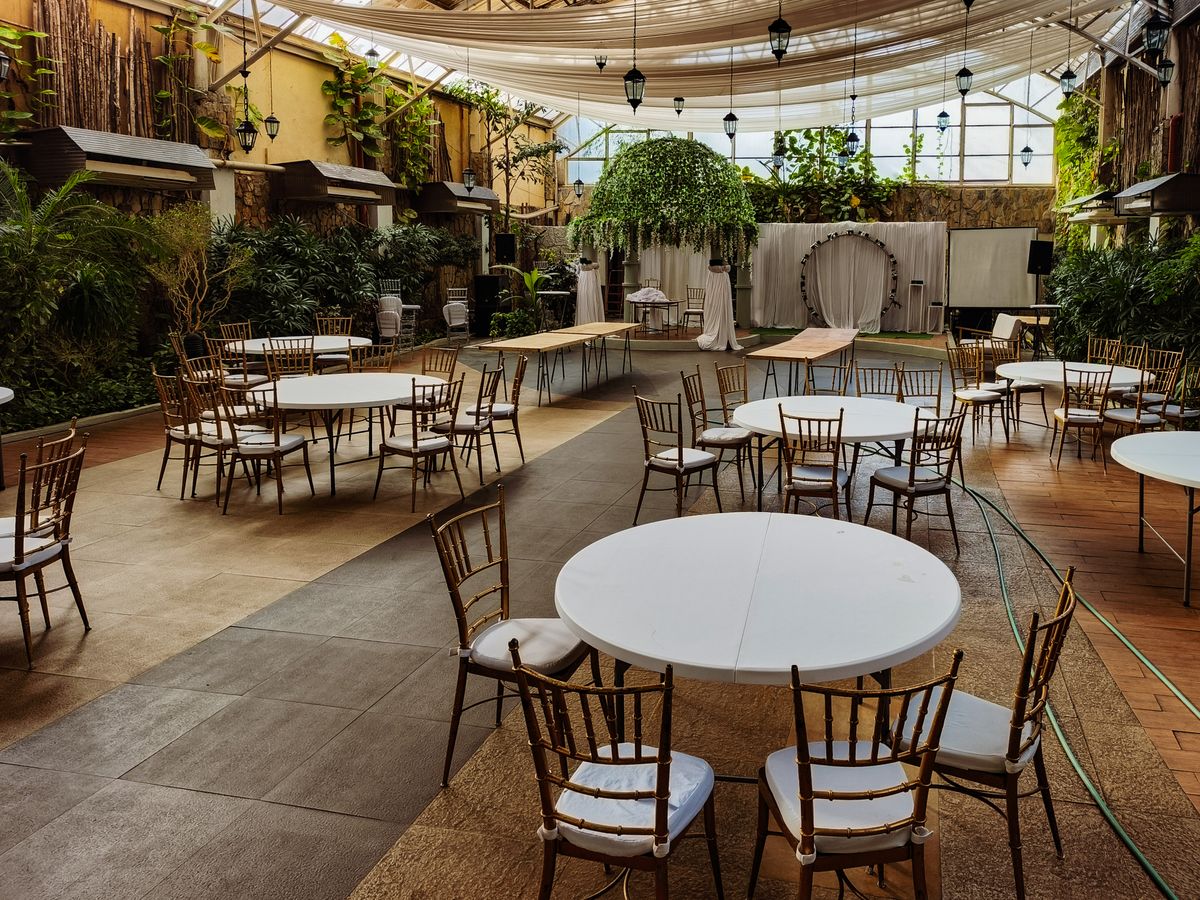
Dedicated wedding halls know the drill and usually include tables, chairs, linens, lighting, and catering. Pricing is predictable, guest counts can be large (200+), and they tend to be flexible on decor. The trade-off: they can feel generic without heavy personalization.
Barns and farms
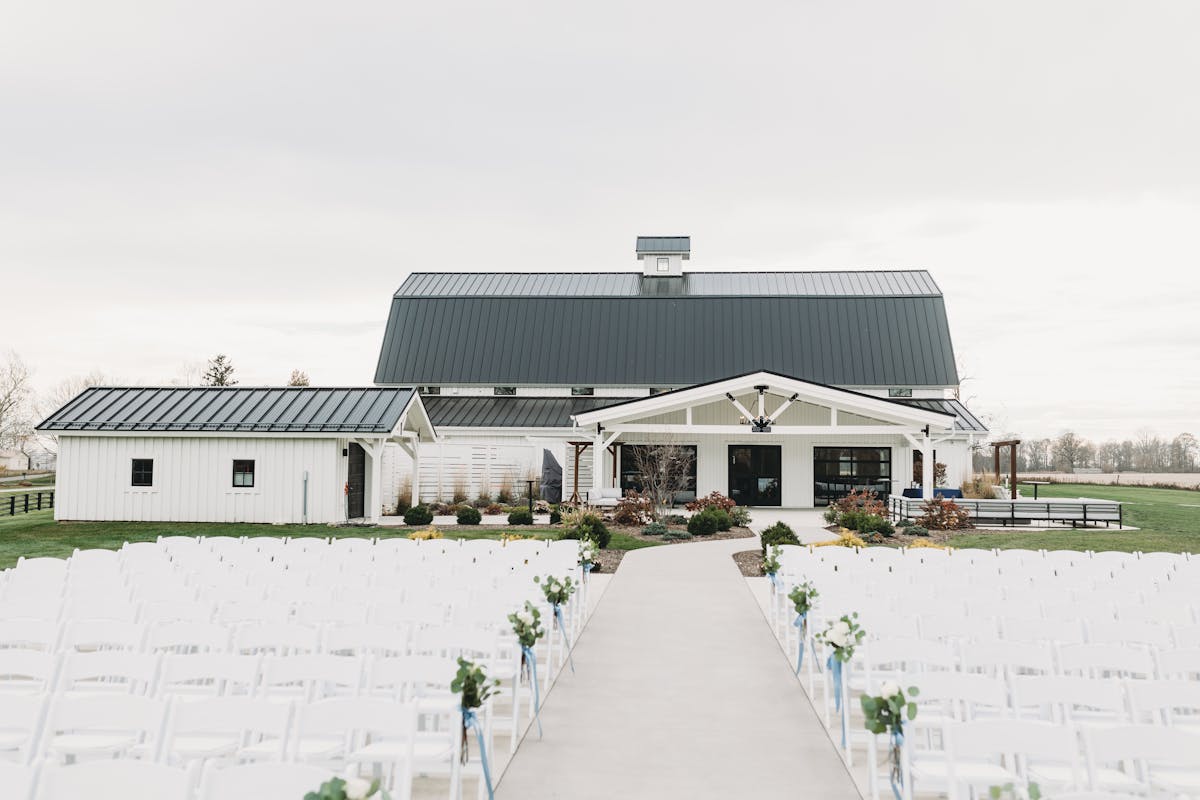
Barns exploded in popularity over the last decade and are still a top pick for relaxed, rustic, or garden-party weddings. Expect to bring in more outside vendors (catering, rentals, sometimes restrooms). Beautiful and photogenic, but check for climate control, parking, and rain plans.
Private estates, mansions, and vineyards
Big statement venues with built-in atmosphere. Vineyards, in particular, combine beautiful grounds with on-site catering and alcohol. Rental fees are higher, but you’re paying for uniqueness and a built-in backdrop.
Restaurants and breweries
For smaller weddings (under 80 guests), a private restaurant room or brewery taproom can be gorgeous and dramatically cheaper than a traditional venue. Food quality is usually excellent, and there’s often no site-rental fee — just a food and beverage minimum.
Outdoor spaces: parks, beaches, gardens
Public parks, state beaches, and botanical gardens offer stunning scenery at a fraction of private venue pricing. Research permit rules, amplified-sound restrictions, and rain backup options carefully.
Non-traditional venues: museums, libraries, rooftops, warehouses
Museums, art galleries, libraries, rooftop bars, and loft warehouses make memorable, conversation-starting venues. Guests remember a ceremony under a T. rex or a reception on a city rooftop for decades. Just confirm sound rules, accessibility, and setup windows.
Backyard and home weddings
If you or a family member has space, a home wedding can feel incredibly personal. Budget for tenting, rentals, restrooms, generators, and insurance — “free” backyards often cost more than you’d expect by the time you finish.
How to Build a Smart Shortlist
Don’t tour 15 venues. Seriously. The goal is to narrow your internet research down to a shortlist of 3 to 5 venues you tour in person. Here’s how to get there.
Start with a spreadsheet. Columns should include: Venue Name, Location, Capacity, Base Rental Fee, Food/Beverage Minimum, What’s Included, Dates Available, Vendor Policy, and First Impression. Pulling this information into one view is the fastest way to see which venues are real contenders vs. wishful thinking.
Email each venue a short inquiry the same way: your date range, guest count, approximate budget, and two or three specific questions (availability, all-in pricing for your date and count, what’s included). A venue that takes 10 days to respond — or never responds — is telling you something important about their customer service during the actual planning year.
Cut ruthlessly. If a venue can’t fit your guest count, is double your budget, has no Saturdays left in your season, or requires vendors you don’t want — eliminate it, even if the photos are stunning. A venue you can’t realistically book is just a distraction.
Touring Venues: What to Look For
Visiting in person is non-negotiable. Photos are taken at the best angle, with the best light, on the best day. Your wedding will happen in real conditions — and you need to see what those look like.
Schedule tours on the same day of the week and time of day you’d be getting married, if possible. A garden that glows at 6pm in June looks very different at 2pm in October. Pay attention to natural light, noise from nearby roads or flight paths, and how the ceremony space flows into the reception space.
Walk the guest path. From the parking lot to restrooms to the bar to the dance floor — how does it feel? Are there bottlenecks? Are restrooms enough for your guest count? Is there an obvious place for cocktail hour? Is the getting-ready suite nice enough that you actually want to spend six hours there?
Bring a measuring eye. How big is the dance floor? Does the head table fit where you picture it? Where does the DJ go? If the venue can show you a layout from a previous wedding with a similar guest count, ask to see it.
Questions to Ask Every Wedding Venue
Bring a printed list. You will forget. Here are the questions every couple should ask on a site visit.
Pricing and contract
- What is the total all-in price for our date and guest count?
- What exactly is included — tables, chairs, linens, china, setup, breakdown, lighting, AV?
- What are the food and beverage minimums, and do they include tax and service charge?
- What is the deposit, when is it due, and is it refundable?
- What is the cancellation and postponement policy?
- Is there wedding insurance built in, or do we need to provide our own?
Vendors
- Do you have a preferred or required vendor list? What are the penalties for using outside vendors?
- Can we bring our own caterer, florist, and DJ?
- Is there a corkage fee or outside alcohol policy?
Logistics
- How many hours does the rental include, and what’s the overtime fee?
- What time can vendors arrive for setup, and what’s the breakdown deadline?
- Is there a bridal suite and groom’s suite? How early can we access them?
- Is the venue accessible for elderly guests and guests with disabilities?
- What’s the parking situation, and is there valet or a shuttle needed?
Backup and logistics
- Is there a rain plan for outdoor ceremonies? Does using it cost extra?
- Is there a coordinator included, or just a venue manager?
- Are there noise ordinances or end-of-night cutoff times?
- How many weddings happen here per day or per weekend?
How to Compare Venues Fairly
One of the trickiest parts of shopping for a venue is that no two quotes look alike. Venue A charges a $12,000 flat rental with no catering. Venue B charges $3,500 rental plus a $15,000 food and beverage minimum. Venue C wraps it all into an “inclusive package” for $22,000. Which is actually the best deal?
To compare fairly, build an “all-in estimate” for every venue at the same guest count. Plug in:
- Venue rental fee
- Food per person × guest count
- Beverage per person × guest count
- Service charge (usually 20–24%)
- Sales tax on food, beverage, and sometimes rental
- Rentals not included (linens, chairs, lighting, dance floor)
- Outside-vendor fees, if any
- Cake-cutting, corkage, or bartender fees
Now you’re comparing apples to apples. Couples are often shocked that the “cheap” venue ends up most expensive once rentals and minimums are added in, while the “expensive” inclusive package comes out lowest per guest.
How to Find an Affordable Wedding Venue
If the quotes you’re getting feel out of reach, you’re not alone. The good news: there are real, proven ways to find a wedding venue you love for significantly less. Try these strategies.
Pick a non-peak date
Fridays and Sundays are typically 20–30% cheaper than Saturdays at the same venue. Winter weddings (January, February, early March) can be 30–50% cheaper in most regions outside of ski country. Even moving from June to April or early November can drop costs significantly.
Consider a morning or brunch wedding
Morning ceremonies with a brunch or lunch reception cost dramatically less on food, alcohol, and venue time. They’re also delightful in their own right, and guests often prefer them.
Shrink the guest list
The fastest way to cut venue costs isn’t negotiating — it’s inviting fewer people. Every plate saved multiplies across food, drink, cake, rentals, and favors. A 75-person wedding at a $250-per-plate venue is wildly different from a 150-person wedding at the same place.
Look at non-traditional venues
Restaurants, breweries, public parks, community centers, art galleries, university clubs, libraries, and Airbnb estates often cost a fraction of dedicated wedding venues. Rental fees at a great restaurant’s private room can be $0 with a reasonable food and beverage minimum.
Ask about discounted dates
Many venues have “orphan” dates where a block is open and they’d rather book it cheap than leave it empty. Ask explicitly: “Do you have any discounted dates in the next 6–12 months?” You’d be surprised how often the answer is yes.
Negotiate what’s included
Even at fixed-price venues, there’s usually some flexibility. Ask if they can throw in the upgraded chairs, waive the cake-cutting fee, extend the rental by an hour, or include a champagne toast. The worst they can say is no.
Reading the Contract Before You Sign
Once you’ve picked your venue, the contract is where promises become guarantees — or loopholes. Never sign on the tour. Take the contract home, read every page, and if anything matters to you, it has to be in writing.
Double-check the contract includes the exact date, hours, spaces (ceremony, cocktail, reception, getting-ready rooms), inclusions (tables, chairs, linens, AV), guest count, food and beverage minimum, overtime rates, cancellation terms, and force-majeure clauses covering weather and public health events.
Pay special attention to automatic price escalators, service-charge percentages, and what happens if they accidentally double-book your date. A good venue will happily walk you through every clause. A venue that rushes you to sign is a yellow flag.
Common Wedding Venue Mistakes to Avoid
These are the traps couples fall into again and again. Sidestep them and you’ll save money, time, and stress.
Booking before setting a budget
Emotions are powerful. Touring a beautiful venue and putting down a deposit before you’ve modeled the full cost is the #1 way couples end up dramatically over budget. Always do the full math first.
Ignoring hidden fees
Service charges, gratuity, taxes, corkage, cake-cutting, overtime, setup, and breakdown fees can add 30% or more to a “base” quote. Always ask for an all-in estimate in writing.
Over-prioritizing Instagram aesthetics
Stunning photos don’t equal a stunning guest experience. A gorgeous barn with no AC in August or a rooftop with no elevator and no shade can turn into a bad memory fast. Think about your guests’ entire 6-hour experience, not just the portraits.
Skipping the rain plan
For outdoor weddings, always ask exactly what happens if it rains, and see the rain-plan space in person. If the backup is a crowded tent inside a parking lot, you want to know that now, not three days before the wedding.
Not asking about simultaneous events
Some venues host two or even three weddings in a day. Find out whether you’ll have the space to yourselves or be sharing gardens, restrooms, or bridal suites with another couple’s party.
Forgetting about logistics for guests
Remote rural venues and mountain estates look dreamy on a mood board but can become nightmares if guests have to drive 45 minutes on a winding road after an open bar. Think about hotels, transportation, parking, and accessibility early.
Frequently Asked Questions
How far in advance should I book a wedding venue?
Aim for 12 to 18 months before your wedding date. Popular venues with peak Saturdays in May, June, September, and October often book 18–24 months out. Off-season dates and weekdays can sometimes be booked 6 to 9 months in advance.
How much does a wedding venue cost?
In 2026, the average wedding venue in the U.S. costs between $6,000 and $15,000 for rental alone, or $10,000 to $25,000 for all-inclusive packages at a 100-guest wedding. Major metro areas and luxury venues can easily run $30,000–$60,000+. Rural barns, public parks, and smaller restaurants can come in well under $5,000.
What percentage of the wedding budget should go to the venue?
Typically 30–50% of the total wedding budget goes to the venue, catering, and bar combined. If catering and beverage are separate, the venue alone often takes 15–25%.
Should I book the venue or the photographer first?
The venue. The venue determines your date, which in turn determines photographer, florist, and DJ availability. Book the venue first, then lock your other top-priority vendor.
How do I find cheap wedding venues?
Look at non-traditional spaces (restaurants, breweries, public parks, libraries, museums), pick a Friday, Sunday, or off-season date, host a smaller or morning wedding, and ask venues directly about discounted or “orphan” dates. Shifting just the day of the week can cut your venue cost by 20–30%.
Do I need to hire a wedding planner to find a venue?
No, plenty of couples find a venue on their own. That said, an experienced local wedding planner can save you weeks of research and hundreds of emails. Even a single 60-minute paid consultation can be worth it for their venue recommendations alone.
What should I not do when choosing a wedding venue?
Don’t sign a contract on the tour, don’t ignore fine-print fees, don’t fall in love with a space that can’t fit your guest count or your budget, and don’t skip the in-person visit. Photos always look better than reality.
Can I get married in a non-wedding venue?
Absolutely. Art galleries, museums, breweries, private homes, public parks, beaches, rooftops, restaurants, warehouses, and libraries all host weddings regularly. Just check on permits, noise rules, insurance requirements, and setup/breakdown windows before you commit.
Final Thoughts on Finding Your Wedding Venue
Finding the right wedding venue comes down to one thing: understanding what actually matters to you as a couple before the Pinterest algorithms start telling you what you should want. Nail your budget, your guest count, your season, and your vibe, and the venue search becomes dramatically simpler.
Tour only places that realistically fit all four. Ask the same detailed questions at every venue. Compare all-in costs, not base rates. Read the contract carefully. And remember — the best venue isn’t the most expensive or the most-photographed. It’s the one where your people will gather, eat, laugh, dance, and celebrate the actual start of your marriage.
Take the time to find it right, and the rest of your wedding planning gets easier from here. For more practical planning help, check out our guides on how to find cheap hotels for your guest block, how to find a financial advisor to plan life after the wedding, and how to find a notary for any prenup or marriage paperwork.