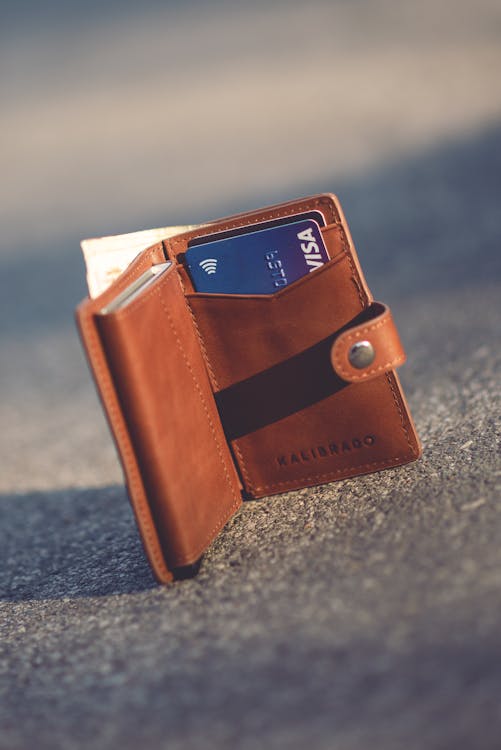
If you’re desperately trying to figure out how to find a lost wallet, you already know the sinking feeling – that moment when you reach into your pocket or purse and come up empty. Your stomach drops. Your mind races. Your whole day is suddenly derailed.
Take a breath. You’re not alone. According to research by MoneyTips, 6 out of 10 people report losing their wallet at some point. Wallets turn up in the most unexpected places, and the good news is that most lost wallets are either found by the owner or returned by an honest stranger.
In this guide, we’ll walk you through exactly how to find a lost wallet – starting with the smartest search strategies, moving through protective steps if you can’t recover it, and ending with tips to make sure it never happens again.
Table of Contents
- Retrace Your Steps Methodically
- Search Common Spots at Home
- Use a Bluetooth Tracker
- Contact Places You Recently Visited
- Check with Local Authorities and Lost & Found
- Lock or Cancel Your Cards Immediately
- File a Police Report
- Place a Fraud Alert on Your Credit
- Replace Your Driver’s License and ID
- Update Your Accounts and Recurring Payments
- How to Prevent Losing Your Wallet Again
- Frequently Asked Questions
Step 1: Retrace Your Steps Methodically
The single most effective way to find a lost wallet is to systematically retrace your steps. This sounds obvious, but most people do it haphazardly and miss the wallet entirely – only to find it later in the first place they should have looked.
Here’s how to do it properly:
Build a Timeline of Your Day
Start from the last moment you clearly remember having your wallet. Maybe you paid for coffee at 8 a.m., or you pulled it out to show your ID at noon. Work forward from there. Where did you go? What did you touch? Who were you with?
Write it down if it helps. A physical list forces your brain to focus and prevents you from skipping over locations mentally.
Focus on Transaction Points
Your wallet most commonly disappears at moments when you take it out – paying at a register, showing your ID, or grabbing a card for a vending machine. These are your highest-priority locations:
- Coffee shops, restaurants, and fast-food counters where you paid
- Gas stations where you may have set it on the pump
- Grocery store checkout lanes (wallets often slide off conveyor belts)
- ATMs and bank counters
- Doctor’s offices, pharmacies, or reception desks where you showed ID
Check Your Vehicle Thoroughly
Your car is one of the top places wallets hide. Check under the seats, in the door pockets, between the seats and center console, in the glove compartment, and in any cup holders. It’s surprisingly easy for a wallet to slide out of your pocket when you sit down and get wedged somewhere invisible.
If you used a ride-share service recently, check the app’s “Lost Item” feature – both Uber and Lyft have dedicated processes to reconnect passengers with lost belongings.
Step 2: Search Common Hiding Spots at Home
If your wallet went missing at home, the search is more contained – but also trickier, because homes have dozens of places where small objects disappear.
The Most Common Home Hiding Spots
Check these locations in order – they account for the majority of “lost at home” wallet discoveries:
- Couch cushions: Slip your hand deep between and under every cushion, including the back cushions. Wallets are notorious for falling between seats.
- Jacket and coat pockets: Check every jacket, hoodie, and coat you’ve worn in the past week – not just the most recent one.
- Nightstand or dresser: Many people absentmindedly place their wallet here when undressing, especially if they’re tired.
- Bathroom counter or shelf: If you emptied your pockets before a shower, your wallet may have been left on a bathroom surface.
- Laundry: Check pockets in the laundry basket, washer, and dryer. A wallet left in pants can survive a wash cycle but will be hidden inside the drum.
- Gym bag or backpack: Look in every pocket, including small zipper compartments that are easy to forget.
- Between or under furniture: Use a flashlight to check under beds, sofas, and armchairs – wallets can fall silently and slide far underneath.
Try the “Fresh Eyes” Approach
After you’ve searched and come up empty, take a 15-minute break and then search again – but this time, move through your home as if you’ve never been in it before. Look at surfaces you normally ignore. Open drawers you wouldn’t normally open. Our brains become “blind” to familiar environments, and a fresh perspective genuinely helps.
You can also ask another person to search – they won’t have the same visual blind spots you do.
Step 3: Use a Bluetooth Tracker (If You Have One)
If you were forward-thinking enough to put a Bluetooth tracker in your wallet – such as an Apple AirTag, a Tile card, a Chipolo CARD, or a Samsung SmartTag – now is when that investment pays off.
How Wallet Trackers Work
Bluetooth wallet trackers connect to an app on your phone and broadcast their location using either Bluetooth (short range, up to ~300 feet) or a crowd-sourced network (much longer range). Here’s how to use each:
- Apple AirTag: Open the “Find My” app on your iPhone. Select “Items” and tap your AirTag. If it’s in Bluetooth range, you can play a sound. If it’s far away, the app will show its last known location on a map via Apple’s Find My network.
- Tile: Open the Tile app and tap “Find.” If in range, your Tile will ring. The app also shows the last known location.
- Chipolo CARD: Open the Chipolo app and tap the ring button. Chipolo also lets you mark the item as lost so other Chipolo users can help locate it.
What to Do If the Tracker Is Out of Range
If your tracker shows a last known location but is no longer pinging, note that location and physically go there. Many wallets are found by retracing to the GPS pin. You can also enable “Lost Mode” on most trackers, which will send you an alert and the exact location the moment the tracker is detected by any device on that network.
Don’t have a tracker? After you recover your wallet – or get a new one – investing in a slim Bluetooth tracker is one of the best things you can do. We’ll cover this more in the prevention section below.
Step 4: Contact Places You Recently Visited
Honest people turn in lost wallets more often than you might think. Studies have shown that wallets with identification are returned at surprisingly high rates – sometimes over 50% in certain countries and cities. That means calling the businesses you visited is absolutely worth your time.
How to Make Effective Lost Item Calls
Don’t just call and ask “did someone turn in a wallet?” – be specific. Say:
- The exact time and date you were there
- What you ordered or purchased (helps them match it to a specific register or employee)
- A description of the wallet: color, material, brand, distinctive marks
- Your name and a callback number
For large businesses like malls, hotels, and transit systems, ask specifically to be transferred to their lost and found department. These departments log found items and can tell you immediately if your wallet has been turned in.
Ride-Share and Taxi Lost Items
If you took an Uber, Lyft, or taxi recently, contact them immediately. Both Uber and Lyft have in-app lost item reporting features that connect you directly with the driver. For traditional taxis, call the dispatch company with your pickup time and location. Most drivers check their vehicles at the end of each shift.
Public Transportation Lost and Found
Bus systems, subway networks, and train services all maintain lost and found offices. For major transit systems, you can often file a lost item report online. Check the transit authority’s website – many have dedicated lost property portals where you can describe the item and receive alerts if it’s turned in.
Step 5: Check with Local Authorities and Lost & Found
Beyond businesses, there are several centralized places where honest finders turn in lost wallets:
Local Police Stations
Many people who find a wallet on the street take it directly to the nearest police station. Call your local non-emergency police line and ask if a wallet matching your description has been turned in. Bring ID when you go to retrieve it.
Post Online in Local Community Groups
Post in your local Nextdoor neighborhood group, your local Facebook community group, or on Reddit (your city’s subreddit). Describe the wallet and where you think you lost it, and ask if anyone found it. Many people who find wallets go online specifically to find the owner before turning it in anywhere official.
Keep your description general enough to be recognizable but specific enough that someone with a matching wallet can verify it’s yours – don’t give away every detail publicly to prevent dishonest claims.
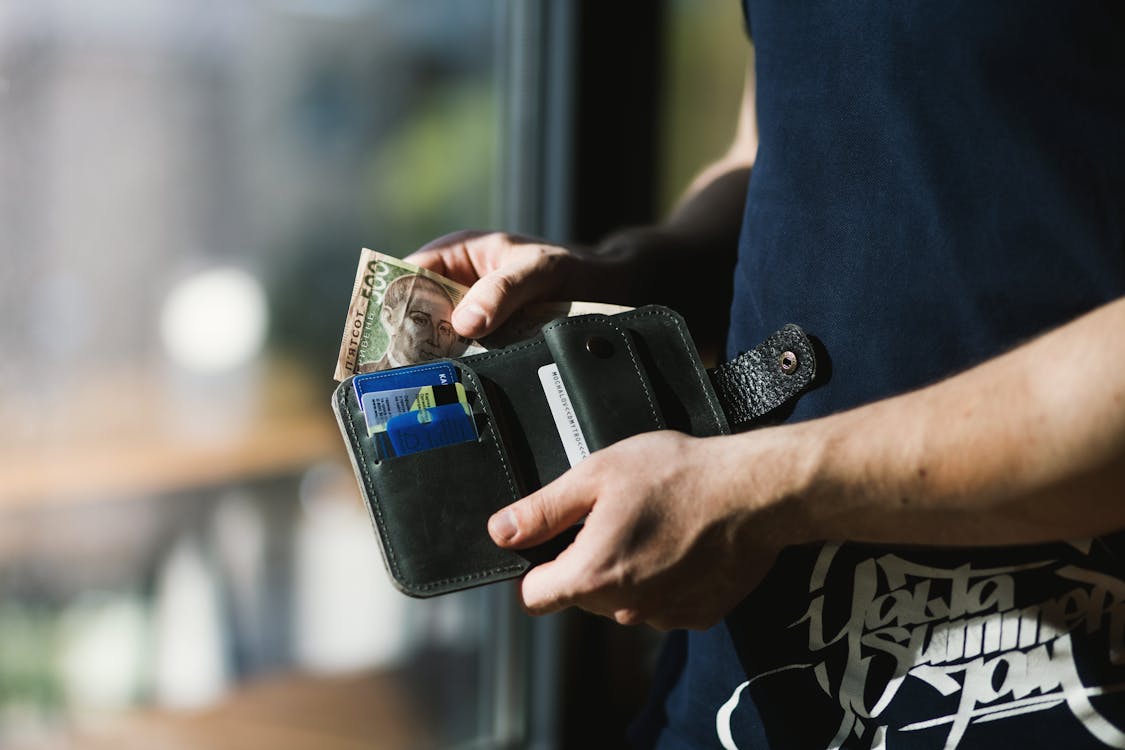
Step 6: Lock or Cancel Your Cards Immediately
If you’ve searched for a few hours without success – or if you suspect your wallet was stolen rather than simply lost – it’s time to shift gears. Protecting your finances becomes the top priority.
Don’t wait days to cancel your cards “just in case” you find the wallet. If the wallet was stolen, every hour of delay increases the chance of unauthorized charges.
Start With Debit Cards First
Debit cards carry significantly more liability risk than credit cards. Under federal law, if you report a debit card lost within 2 business days, you’re only liable for up to $50. Wait more than 60 days, and you could lose everything stolen. Call your bank immediately and ask them to freeze or cancel the debit card.
Most banks now offer instant card freezing through their mobile app – check your banking app first for a faster option.
Then Handle Credit Cards
Call each credit card issuer and report the card lost. Your liability for unauthorized credit card charges is capped at $50 under the Fair Credit Billing Act, and most major issuers offer $0 liability. Still, the sooner you report, the smoother the dispute process if any charges occur.
Keep a list of all cards in your wallet and their customer service numbers somewhere other than your wallet – this is a preparation tip worth doing today.
Consider a Temporary Card Lock vs. Full Cancellation
If you’re still actively searching and think there’s a good chance the wallet will be found, many banks let you temporarily lock your card without canceling it. This prevents new charges while keeping your account number intact. If you find the wallet, you simply unlock the card. If you don’t find it within 24–48 hours, escalate to a full cancellation and request replacement cards.
Step 7: File a Police Report
Filing a police report might feel like overkill for a lost wallet, but it serves several important purposes:
- Identity theft protection: If someone uses your ID or personal information fraudulently, a police report creates an official record that protects you.
- Insurance claims: Some homeowners and renters insurance policies cover theft, including contents of a stolen wallet. A police report is typically required to file a claim.
- Driver’s license replacement: Some states require a police report number when replacing a stolen driver’s license.
- Credit dispute documentation: If fraudulent accounts are opened in your name, a police report strengthens your dispute case with credit bureaus.
You can usually file a non-emergency police report online or by phone – you don’t need to go to a station in person for a lost wallet. Check your local police department’s website for their non-emergency reporting options.
Step 8: Place a Fraud Alert on Your Credit
If your wallet contained your Social Security card, passport, or other government identification, you need to act fast to prevent identity theft.
How to Set Up a Fraud Alert
Contact any one of the three major credit bureaus – Equifax, Experian, or TransUnion – and request a fraud alert. You only need to contact one; they are legally required to notify the other two. A fraud alert:
- Notifies lenders to take extra steps to verify your identity before approving new credit
- Is free to place and lasts for one year (renewable)
- Doesn’t affect your credit score
- Can be extended to 7 years if you’ve been a victim of identity theft
Consider a Credit Freeze
A fraud alert is a warning; a credit freeze (also called a security freeze) is a lock. With a credit freeze in place, no one – including you – can open new credit accounts in your name without first unfreezing your credit. It’s the strongest protection available and it’s also free at all three bureaus.
To freeze your credit, you’ll need to contact all three bureaus separately:
- Equifax: equifax.com/personal/credit-report-services
- Experian: experian.com/freeze/center.html
- TransUnion: transunion.com/credit-freeze
Step 9: Replace Your Driver’s License and ID
Replacing your driver’s license is often the most time-consuming part of wallet recovery, but it’s critical. Driving without a valid license is illegal in every U.S. state.
How to Replace Your Driver’s License
The process varies by state, but the general steps are:
- Visit your state’s DMV website to check if you can apply for a replacement online or by mail (many states offer this option).
- Gather required documents: You’ll typically need proof of identity (passport, birth certificate), proof of your Social Security number, and proof of residency.
- Pay the replacement fee: Most states charge $10–$25 for a replacement license.
- Receive a temporary license: Many DMVs issue a paper temporary license on the same day, with the permanent card arriving by mail in 1–3 weeks.
Other Documents to Replace
Depending on what was in your wallet, you may also need to replace:
- Health insurance card: Call your insurance provider – replacement cards are usually free and arrive within a week.
- Social Security card: Apply at ssa.gov. Note: It’s actually safer to not carry your Social Security card. Once you replace it, keep it at home.
- Passport: If your passport was in your wallet, report it as lost at travel.state.gov and apply for a replacement. A lost passport is especially serious if you have upcoming travel.
- Loyalty and membership cards: Most can be re-issued through the issuing app or website.
Step 10: Update Your Accounts and Recurring Payments
Once your new cards arrive, don’t forget to update all the places where your old card information was stored. This is tedious but necessary to avoid missed payments or service interruptions.
Common Places to Update Your Payment Information
- Streaming services (Netflix, Hulu, Spotify, Apple TV+, etc.)
- Online shopping accounts (Amazon, eBay, etc.)
- Utility autopay accounts
- Subscription boxes and memberships
- Ride-share apps (Uber, Lyft)
- Food delivery apps (DoorDash, Uber Eats, Grubhub)
- Your employer’s direct deposit (if your bank account changed)
- Rent or mortgage autopay
The easiest way to catch everything: look through your last two months of bank and credit card statements and note every company that charged you. Those are all the places you need to update.

How to Prevent Losing Your Wallet Again
Once you’ve been through the stress of a lost wallet, most people are highly motivated to make sure it never happens again. Here are the most effective strategies:
Invest in a Bluetooth Tracker
A slim Bluetooth tracker is the single best investment you can make after a wallet loss experience. The best options for wallets:
- Apple AirTag (with a slim AirTag wallet holder): Best for iPhone users, leverages Apple’s massive Find My network
- Tile Slim: Credit-card sized, works with iOS and Android, 3-year battery life
- Chipolo CARD Spot: Works with Apple’s Find My network, very slim design
- Samsung SmartTag2: Best for Samsung Galaxy users
These trackers cost between $25–$40 and can save you enormous stress and expense. Consider it a very worthwhile insurance policy.
Carry Less in Your Wallet
The minimalist wallet approach has benefits beyond aesthetics: a thinner wallet with fewer items is less catastrophic if lost. Consider keeping in your wallet only:
- Driver’s license or state ID
- 1–2 payment cards
- A small amount of emergency cash
- Health insurance card
Leave your Social Security card, passport, and rarely-used cards safely at home. Digital alternatives like Apple Pay, Google Pay, and digital ID apps (available in many states now) can replace physical cards for most transactions.
Build a “Wallet Check” Habit
Before leaving any location – a restaurant, a store, a car, a friend’s house – do a quick three-point check: phone, keys, wallet. Make it automatic. This habit takes about two seconds and prevents the majority of lost wallet situations.
Use a Designated Wallet Spot at Home
Choose one specific spot at home where your wallet always lives when you’re not using it – a hook near the door, a specific drawer, a dish on the nightstand. Consistency eliminates the “where did I put it?” problem entirely. The wallet is always in the spot, unless it’s on your person.
Photograph the Contents of Your Wallet
Right now – before anything goes missing – take out everything in your wallet and photograph both sides of every card and document. Store these photos securely (not in your phone’s public camera roll – use a password manager’s secure notes feature or an encrypted folder). This makes replacing everything dramatically faster if your wallet is lost.
Consider a Money Clip or Slim Wallet
Bulky wallets are more likely to fall out of pockets, especially in cars and on soft seating. A slim wallet or money clip keeps your essential items compact and is less likely to slip out unnoticed.
Frequently Asked Questions
What’s the first thing I should do if I lose my wallet?
The very first step is to stay calm and methodically retrace your steps from the last time you remember having your wallet. Check your car, coat pockets, and the most recent places you visited before calling businesses or canceling cards. Most wallets are found within the first hour of searching.
How long should I wait before canceling my cards?
If you suspect theft, cancel your debit card immediately – the liability window is tight. For credit cards, you can afford to wait a few hours while you search, since your liability is well-protected. But if you haven’t found the wallet within 24 hours, cancel all cards and request replacements.
What do I do if my wallet was stolen?
If you believe your wallet was stolen (rather than lost), take the following steps in order: (1) Cancel all cards immediately, (2) file a police report, (3) place a fraud alert on your credit, (4) replace your driver’s license, and (5) monitor your accounts closely for the next 90 days.
Can I track my wallet without a Bluetooth tracker?
Without a tracker, your main options are retracing your steps, contacting businesses you visited, checking with local lost and found services, and posting in community groups online. These methods are effective for a genuinely lost wallet but won’t help if it was stolen. A Bluetooth tracker is the only technology that allows real-time location finding.
Is it worth filing a police report for a lost (not stolen) wallet?
Yes, for several reasons: some states require a police report to replace a stolen driver’s license, a report protects you if someone commits fraud with your ID, and it may be required for any insurance claim. It takes about 10 minutes and costs nothing – it’s always worth doing.
How do I replace my driver’s license quickly?
Visit your state’s DMV website first – many states offer same-day online or mail-in replacement. Some states allow you to get a temporary driving permit immediately at a DMV office while your permanent replacement is mailed to you. The fastest route is usually the DMV’s online portal if your state offers it.
What if someone finds my wallet and uses my cards?
Report any unauthorized charges to your card issuer immediately. Federal law protects you from unauthorized credit card charges (capped at $50, and most issuers offer $0 liability). For debit cards, the key is to report quickly – within 2 business days limits your liability to $50. Document every unauthorized charge and file a dispute with your card issuer, providing your police report number as support.
Should I carry my Social Security card in my wallet?
No. Financial experts and identity theft specialists universally advise against carrying your Social Security card in your wallet. Your SSN is the key piece of information identity thieves need most. Memorize your number and keep the card locked at home. If you’ve been carrying it and just lost your wallet, report it to the SSA immediately and consider placing a fraud alert on your credit.
Conclusion
Losing your wallet is stressful, but it doesn’t have to become a financial disaster. By following the steps in this guide – searching methodically, contacting the right people, and moving quickly to protect your finances – most people either recover their wallet or limit the damage from its loss.
The most important takeaway: act fast but don’t panic. Most lost wallets are found within 24 hours, and even when they’re not, your financial protections are stronger than you probably think. Cancel your cards, file a police report, place a fraud alert, replace your ID, and update your accounts – in that order.
And once this is behind you, invest in a Bluetooth tracker and pare down what you carry. Your future self will thank you.
Looking for more helpful guides? Check out our articles on how to find a lost phone, how to find your credit score, and how to find unclaimed money that may be owed to you.